Turtle Season Didn't End in July. It's Ending Now.
September 17, 2026
September 17, 2026
Walk the Blue Trail after six on most evenings this month and you'll see something that doesn't match the calendar most people carry around in their heads. Nesting season, the one everyone in Dorado talks about every spring, wrapped up back in July. But if you've walked past the dune line near East Beach in the last few weeks, you've probably noticed small, fresh tracks crossing the sand toward the water, sometimes dozens of them in a single stretch, well after the mother turtles themselves are gone. Those aren't leftover nesting tracks. Those are hatchlings, and they're still coming.
That gap between what people assume is happening and what's actually happening on this stretch of coastline is worth understanding if you live along the trail, because it changes what an evening walk here looks like right now versus what it will look like in a month.
Leatherback nesting in Dorado runs roughly from March through July, which is when the adult females come ashore at night to dig nests and lay eggs. That's the season that gets talked about, the one with the visible adult turtles. But the eggs take about two months to incubate, and the hatchling emergence that follows runs from May through September. So the actual span of turtle activity on Dorado's beaches runs closer to seven months than the five most people assume covers just nesting, and the part that's happening this month, tiny hatchlings clawing their way out of the sand and making a run for the surf, is the tail end of a much longer window that most residents never separate from the nesting headlines.
That distinction matters if you're timing an evening walk. September isn't a quiet month for turtle activity here. It's arguably the least crowded month for it, since the volunteer patrols and researchers that show up in force during nesting season have largely wrapped their fieldwork, but the hatchlings themselves are still working their way to the water on their own schedule.
The research happening on Dorado's beaches isn't abstract or seasonal marketing. The New England Aquarium's Anderson Cabot Center has run a leatherback tagging project here for six consecutive years now, working alongside Puerto Rico-based partners including Chelonia and Amigos de las Tortugas Marinas. In 2025, tagging efforts in Dorado were led by Chelonia scientist Julimar Nevárez, who became the first Puerto Rican woman to lead satellite tag attachment on a nesting leatherback on the island. The team returned in 2026 with a thermal drone brought fully in-house, technology originally developed by collaborator Luis Crespo, allowing patrols to locate nesting females in the dark more efficiently than walking the beach on foot alone.
The researchers who spent time on Dorado's beaches this year noticed something specific about the behavior patterns here versus other nesting sites on the island.
"We saw some really interesting nesting behaviors in Dorado," said Kara Dodge, the research scientist who has led the project since it began.
First-time nesters scattered across the beach without much pattern, while turtles that had nested there before returned to the same stretch of sand repeatedly. That kind of site fidelity is part of why this particular coastline keeps drawing the same research teams back year after year, and it's part of why the hatchling activity you're seeing this month isn't random. It's the direct result of nests that were placed with some intention back in the spring.
The Rockefeller Nature Trail gets described as one continuous eleven-mile loop, and technically it is, but the character changes enough along the way that treating it as a single experience misses the point, especially this month when you're hoping to catch hatchling activity rather than just get a workout in.
The Blue Trail is the four-mile stretch running from the Clubhouse to East Beach, passing Barlovento along the way and skirting the outer edge of the Pterocarpus Forest. This is the segment closest to the active nesting beaches, and it's where you're most likely to see hatchling tracks or, if you time it right at dusk, the hatchlings themselves making their run.
The Green Trail is shorter, about 1.8 miles, and it's more of a botanical walk than a beach walk. It's also where you're likely to hear, if not see, the coquí, Puerto Rico's small native tree frog that announces itself well after dark.
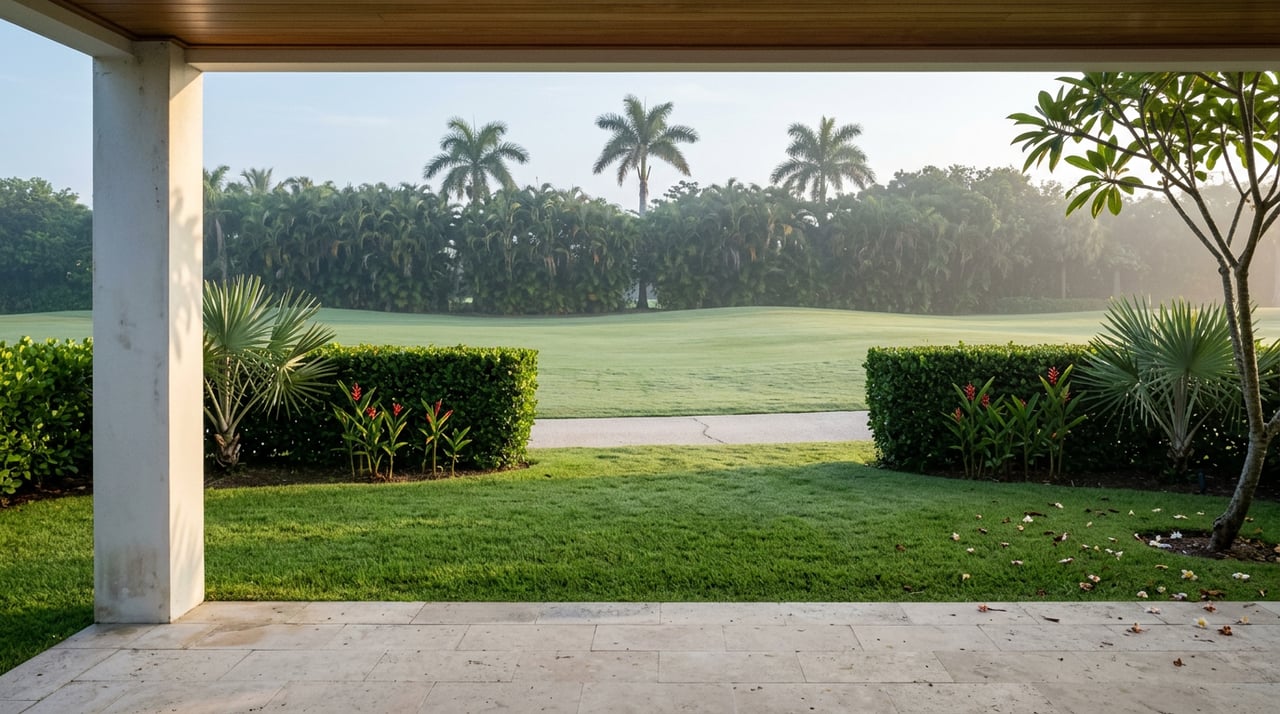
Then there's the shorter western stretch that longtime walkers on the trail will tell you is the one to manage your expectations around. A good portion of it runs as a paved golf-cart lane between the golf course and condo buildings before continuing along a road bordering the highway, with only a brief section that feels genuinely wooded. The payoff, if you stick with it, is a wide ocean overlook at the trail's northwest corner. But if what you're after this month is hatchling activity or shaded forest walking, that segment isn't where the actual nature is concentrated.
For a resident deciding where to walk on any given evening in September, the practical breakdown looks like this:
If the trail itself feels busier than you'd like this month, the Dorado Pterocarpus Forest Natural Protected Area sits just past the trail's edges and offers a genuinely different kind of quiet. It covers just over 30 acres near the northwestern limits of the municipality and is built around a Pterocarpus officinalis swamp, one of the most endangered forest ecosystems remaining in Puerto Rico. It's a distinct protected area from the resort's own trail network, managed separately through Para la Naturaleza, and it doesn't get the same foot traffic as the Blue Trail.
It's not where you'll find hatchling activity, since it's a freshwater swamp forest rather than a beach, but it's a useful alternative for residents who want a walk that doesn't depend on turtle timing at all, especially as hatchling season winds down over the coming weeks and the Blue Trail returns to being simply a nice walk rather than a nightly wildlife event.
The practical takeaway for anyone living along this stretch of Dorado right now is that the next few weeks are a closing window, not an open-ended one. Hatchling emergence tapers off as September ends, and once it does, the Blue Trail goes back to being what it is most of the year, a shaded walk past the Clubhouse and Barlovento without the added layer of nighttime wildlife.
In the meantime, a few habits matter if you're walking at dusk or after dark near the beach sections. Keep flashlights and phone screens pointed down rather than out toward the sand, since hatchlings orient toward light and can be pulled the wrong direction by anything bright near the dune line. Several other nesting communities on the island have swapped white streetlights for red or amber ones during the season for exactly this reason, since those wavelengths don't confuse the hatchlings the way white light does. Dogs on leashes are fine on the trail itself, but keeping them off the open sand near the dune during these final weeks avoids any accidental disruption to nests that haven't fully emerged yet.
None of this requires special access or a guided tour. It just requires knowing that the version of turtle season most people picture, adult leatherbacks hauling themselves up the beach in the spring, is only half the story, and that the quieter half is happening on your own trail right now, for a few more weeks, before it goes back to being just a very good walk.
If you're already living in Dorado Estates and want more of what's actually happening around the resort day to day, or if a friend or family member is thinking about a place along this same stretch of coastline, Margarita Marquez Ortiz - MMO Realty is always glad to talk through what life here actually looks like, season by season.
Stay up to date on the latest real estate trends.



I pride myself on providing personalized solutions that bring my clients closer to their dream properties and enhance their long-term wealth.